on how the idea of "what is right" has shaped my path
one of the most important things i learned during my degree was that, in practice, science is imperfect. no result is valid unless it's accompanied by its uncertainty.

Since I was a little girl, I've been obsessed with the idea that at some point—just before I die, for instance—a man will appear to confirm everything that we, as humanity, know to be true, and give me the answers to everything we think we know but is actually wrong or has remained unproven. In other words, he will tell me what is right and what is wrong about the reason for things. He will give me all the answers to questions about how the world, life, the universe, nature, and everything around us works.
I still have a clear image of this imaginary man etched in my memory. I see only his head, in the distance, against a dark background. His features are outlined by light, and he has long hair. He looks a lot like the image of God I was taught, but he is not God.
I remembered this while reflecting on the role that doing the right thing has played in my life—on how I'm starting to better understand how the idea of what is right has shaped my path. And that's when I realized that this absolute need to know the truth goes back a long way. I built my personality around pursuing results that were objectively right. And I don't just mean making decisions that fell within the realm of what is considered correct, but the satisfaction I got from seeing that what I was doing was right and left no room for doubt.
Whenever people asked me why I studied Physics, I never really knew what to say. Honestly, I didn't quite know why I'd done it. My justification was always linked to it being something that opened many doors; since I didn't know what to study, I chose Physics because I could always do a different master's later to focus on what I actually liked.
On one hand, I studied Physics to postpone a decision. On the other, I studied Physics because it was the right decision at the time—a time when I had to do what was expected of me.
I was a "science" student, and I loved studying and understanding things. But now that I see it with perspective, I've concluded that I didn't love understanding the world so much as I loved solving problems that had a correct solution. It has taken me a long time to understand this. My brain lived on hits of dopamine injected by an objectively correct result: a single, perfect solution that I was capable of reaching because I understood it, because I knew how to do it.
By contrast, taking a philosophy or language exam didn't give me the same security as solving a math problem. When you write a literary commentary, for example, there is no formula to follow. The answer is, to some extent, subjective. And that created insecurity in me: not knowing if I knew it, not knowing if I was doing it well. For me, precision was a requirement.
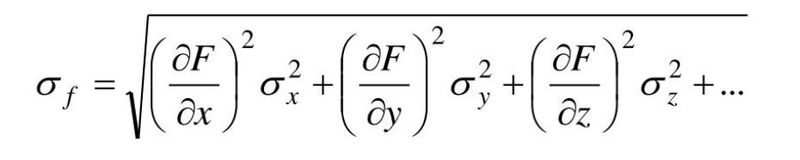
It's funny that one of the most important things I learned during my degree was that, in practice, science is imperfect. No result is valid unless it's accompanied by its uncertainty. Precision is very relative. On paper, everything is simple, but we can never measure a magnitude under ideal conditions. The reality is that there is never one correct result, just a result that falls within margins we consider acceptable and, therefore, correct (but not at all perfect).
Where is perfection when it cannot be measured? What is "right" when it cannot be calculated?
I have always observed creativity and art from the sidelines. I kept my distance, attributing it to others—to creative people. Now I understand it wasn't because I wasn't creative, but because I couldn't handle the uncertainty of not having a single answer, the correct solution, a rigorous way of saying things, or a concise, stipulated method to follow when you don't know how to start. In creativity, there is no perfect answer. However, Mario Vargas Llosa said that "the world of literature, the world of art, is the world of perfection; it is the world of beauty." But I was afraid to paint and go outside the lines, afraid of not making a perfectly straight line because, in my mind, that wasn't right. And I was afraid of outside eyes judging my creation subjectively, and that judgment being negative.
To this day I still feel this way, but until now I didn't understand it. Now I see that I look for perfection in the eyes of others, not my own. I feel safe in external validation, in following the rules. I am afraid of mockery, of feeling embarrassed. I'm still afraid to create, to expose myself, because that makes me vulnerable.
To this day, I'm still looking for that single, perfect solution in every aspect of my life, and I still can't wrap my head around the fact that every result comes with an uncertainty that we might be able to minimize, but can never dismiss. I still don't understand that there isn't just one way to do things right.
I see now that for me, feeling safe means solving something where we already know the answer, like in math exercises. But my brain hasn't realized that life isn't like that. In life, there are problems and the solution is a true unknown. Life is give and take; the solution is trial and error.
Now I understand that perhaps perfection lies in embracing uncertainty, the human experience, and making it our own: turning it into an artistic creation that is perfect in our own eyes. Perhaps perfection lies in following our intuition. Perhaps the right thing is to not think about what is right.
I want to erase the image of that illuminated man who will appear on my deathbed to debunk the Big Bang theory and explain to me how consciousness is generated or how the first forms of life appeared.
I want to replace that image with another, this time of a woman (who will likely look like my mother), who will appear to confirm that nothing is perfect; that everything I did wrong, or everything I didn't do, was the best I could do at the time. She will come to tell me that I did well, that I am doing well, even if it doesn't seem like it; that perfection only exists in the eyes of those who choose to see it.
- jú.
Comments
No comments yet. Be the first to comment!